When it comes to sharing economy, I have to say the sharing bikes, which is a typical sharing economy. The emergence of Sharing bikes has made the sharing economy widely spread and developed in China.
As a new thing, sharing bikes has exploded into various problems, only took two or three years.
In 2017, colorful sharing bikes appeared in the streets. People can scan the QR code on the bicycle with their mobile phones to unlock the bicycle. It is very fashionable. Sharing bikes can be the most vivid example of how technology changes life.
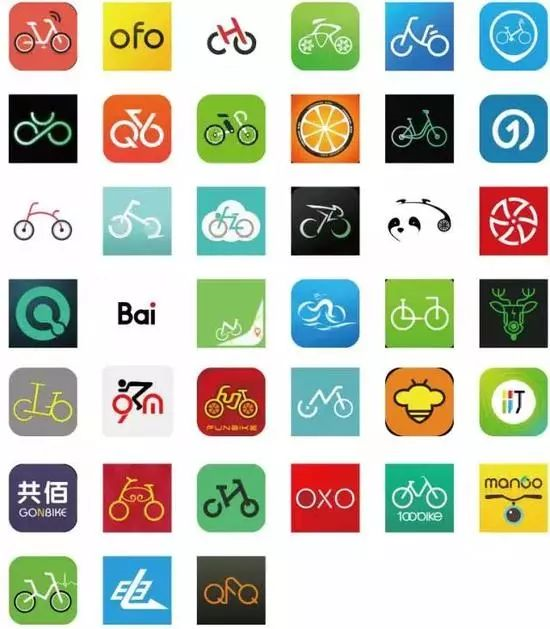
What follows is the fierce competition of sharing bike. Countless companies enter the sharing bike industry. It can be said that how many companies there have, how many colours there is. Each company put bikes in the corners of various cities, resulting in the proliferation of sharing bikes, which full of Subway exits and sidewalks.
There is no denying that the emergence of Shared bikes has facilitated urban travel, especially short commutes. For example, many office workers go to work 10-15 minutes away from the subway station. Before the emergence of shared bicycles, they usually need to walk to work after leaving the subway station. But with bike sharing, they can go to work by bike without having to park the bike to a specific location. It really makes life easier for people.
In 2017, about 500,000 shared bikes are in use in Beijing, with similar penetration in other first-tier cities. At least five separate companies are vying for dominance. As Karl Ulrich (2017) explains, users are crazy about the service. Traffic and subway lines are noticeably better. He has never seen adoption of a hardware-based service happen so quickly.
However, the disorderly over-investment deviates from its original intention of low-carbon environmental protection. The over-investment of shared bicycles caused a great waste of resources. In many cities, as bike-sharing companies are occupying market share frantically, a large number of sharing bikes have put in place, coupled with the inadequacy of the company’s own operating capacity, resulting in many bikes being stacked together. Brings a huge mess to city management.
At the same time, due to the high damage rate of shared bicycles, and because of the randomness of parking, many damaged shared bicycles could not be repaired in a timely manner and were abandoned in many corners of the city. These bicycles have also caused a lot of waste of resources while affecting the city appearance.
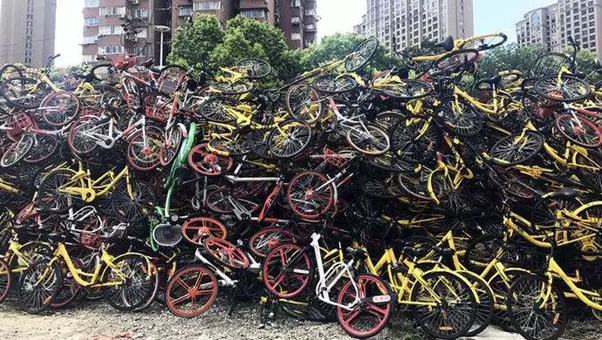
The disorderly release of bike sharing has caused a huge burden on city management. Since the second half of 2017, more than ten cities, including Beijing, Shanghai, Guangzhou, and Wuhan, have issued “no-investment orders” for bike sharing. Suspended bicycle companies added new shared bicycles. Although the “investment ban” has been issued, the news that bicycle companies have privately added new shared bicycles in various places is still often exposed by the media. Since the investment ban on bicycle sharing, as of the end of September, Shanghai has cleared 516,000 bicycles. At the same time, in Beijing and other cities that have issued “bans on investment”, illegal bicycle sharing is still banned.
In order to avoid parking chaos and damage to vehicles, Hongwan Chen (2017) deputy director of the Financial Department of the National Development and Reform Commission, said that government agencies must share publicly available credit information in various fields with bicycle-sharing companies. For those who have severely violated the law, they are restricted from using shared bicycles. For those with good credit status, they can give priority to use and provide convenience services such as free deposit.
In the government’s regulation and the competitive role of the bike-sharing market, some companies lacking strength, blindly entered the bike-sharing market and lacked management capabilities were eliminated. China’s bike-sharing market has become stable in recent years. The remaining companies are Internet companies with a large number of users and excellent management capabilities in digital business models, such as Meituan and Alibaba. This kind of company’s operation of shared bicycles can make better use of its circular economy concept of saving resources and avoiding waste. I believe that with the regularization and standardized management of bicycle sharing, people will definitely experience the convenience in digital.
Sources:
Karl Ulrich (2017) Bike Sharing in China. Retrieved from: https://medium.com/@ktulrich/bike-sharing-in-china-cdddb78d6931
Zhong cheng yong an (2017) Bike-sharing: the waste of resources behind the false prosperity. Retrieved from: http://www.sohu.com/a/207447108_373762
Ran cai jing (2019) The first generation exits, the second generation enters, and the first batch of Shared bikes dies in 2019. Retrieved from: https://tech.sina.cn/csj/2019-09-02/doc-iicezueu2750233.d.html?wm=3049_0032
AYuqin Pu, Chibo Huang (2017) Bike-sharing will be introduced into the credit system, and serious discredited users will not be allowed to use the bikes. Retrieved from: https://tech.qq.com/a/20170506/006145.htm
 Hello world
Hi, Liuyi. That is a great post.
From analysis of sharing bikes case, you indicate that unconstrained proliferation is a waste of resources and also causes a lot of troubles for cities or citizens. This an interesting view. As for sharing economy, I have several thoughts or ideas to discuss with you.
In my opinion, sharing economy is that everyone takes out their idle resources and improves the utilization rate of resources. Is the sharing economy really nice? Can all idle resources be shared? How should the sharing economy market be regulated?
There are many sharing economy models on the market, such as sharing umbrellas, power banks, basketballs, etc. Why sharing bikes are successful, while others such as sharing umbrellas have disappeared from the market.
LikeLike
This article mainly describes the emergence of shared bicycles in the sharing economy, focusing on the Chinese market, and puts forward the convenience of shared bicycles in China and some problems that arise.The major paragraphs of the article pay attention to the advantages and disadvantages of bicycle sharing,not highlighting the changes in science and technology development to human life and career changes in technology . At the same time, the author focuses on the measures and controls of the Chinese government’s reform on the problems of bicycle sharing. Finally, the author also stated the remaining companies are Internet companies, with a large number of users and excellent management capabilities in digital business models that I think this is a bit off-topic, and the author did not describe the specific future development of the profession under the change of science and technology, and did not answer the questions asked by the article
LikeLike